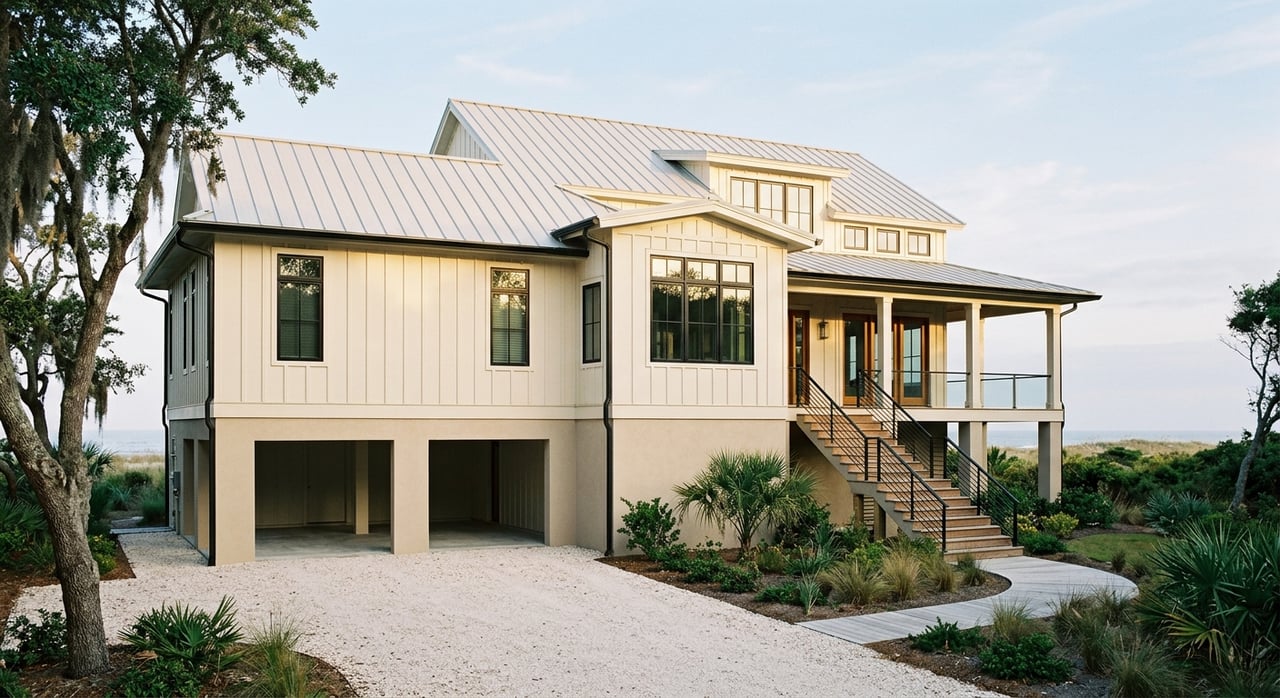
Buying a beach house on Oak Island can feel exciting right up until you realize the real story is not always in the photos. A pretty kitchen and ocean views do not tell you how the house handles flood risk, salt air, drainage, or past repairs. If you want to make a smart offer, you need to vet the home as both a lifestyle purchase and a coastal asset. Let’s dive in.
Start With Risk, Not Finishes
On Oak Island, coastal risk should shape your first review of any listing. Brunswick County identifies multiple flood zones in the area, including VE, Coastal A, AE, A, and X, and FEMA notes that coastal flood hazard areas can bring added wave and wind hazards.
That matters because a beach home is not just a structure. It is also a site with drainage patterns, dune exposure, elevation issues, and storm vulnerability. The Town of Oak Island strictly enforces flood-hazard reduction rules, requires new floodplain buildings to be elevated above base flood elevation, and requires island construction to meet 150 mph wind-zone standards.
In practical terms, read the listing as a starting point for investigation. Bedrooms, finishes, and décor matter, but they should not distract you from the physical and regulatory questions that affect value and ownership costs.
Check These Facts Before You Offer
North Carolina real estate guidance treats several items as material facts, including flood zone, restrictive covenants, HOA status, and obvious electrical malfunction. The North Carolina Real Estate Commission also makes clear that due diligence is your time to investigate the home, pest issues, septic, survey, appraisal, title, loan, and repair concerns.
Before your first offer draft, try to confirm these basics:
- Year built
- Foundation type
- Current flood zone
- Elevation information
- Septic or sewer service
- Whether major additions or renovations were completed
- Whether HOA rules or restrictive covenants affect use or exterior changes
The same state guidance flags roof condition, foundation deterioration, water intrusion, uneven floors, septic or sewer status, and room additions as signs that deserve deeper review. If any of those issues show up in photos, disclosures, or your first showing, treat them as a cue to slow down and investigate.
Review Flood Zone and Elevation Early
Flood review should happen before you get emotionally committed. Brunswick County provides a flood zone viewer, and the county notes that its Floodplain Administrator can answer Flood Insurance Rate Map questions and provide copies of elevation certificates on file.
FEMA also notes that flood maps are official tools and can change over time because flood risk changes. For you, that means an older understanding of the property may not match the current map or current insurance picture.
If a home appears to be in VE, Coastal A, AE, or A, ask more questions before you set your offer price. Flood zone and elevation can affect insurability, future improvements, and how you budget for ownership.
Evaluate the Site, Not Just the House
On Oak Island, dunes and drainage are part of the property story. The Town says dunes protect homes, businesses, wildlife, and the local economy, and beach access is limited to designated walkovers, pathways, and approved access locations. Dune traffic is prohibited.
That tells you something important as a buyer. A home near the beach should be evaluated for how the site interacts with the dune system, not just how the house looks from the street.
Stormwater also deserves close attention. Oak Island says tidal changes, high water tables, level topography, and complex soil conditions make stormwater management more difficult. When you walk the property, look for grading that slopes away from the home, functioning gutters and downspouts, and clear drainage paths or swales.
Focus Your Inspection on Coastal Wear
A standard inspection is important, but on Oak Island you should think more specifically about coastal wear. NC State Extension says coastal environments expose homes to salt spray, saltwater flooding, and sand blasting, all of which can accelerate deterioration.
Pay close attention to the exterior envelope. NC State Extension recommends checking siding, roof edges, gutters, flashing, porches, decks, window frames, door frames, and crawlspaces for moisture-related damage. It also recommends keeping siding at least 6 inches above grade to help reduce decay and termite access.
These details matter because beach homes often age differently than inland homes. A house can look fresh cosmetically while still hiding moisture, corrosion, or material fatigue in areas that are expensive to repair.
Watch for Moisture and Termite Clues
On the coast, pest risk often starts with moisture risk. NC State Extension says eastern subterranean termites are found in all North Carolina counties, and moist wood is one of the most significant conditions that can lead to infestation.
Flooding can also damage or erase termite treatment or bait systems around a home. That is why it makes sense to ask about treatment history, crawlspace humidity, and any known signs of wood-destroying organisms.
If the home has a crawlspace, pay attention to musty odor, soft wood, visible staining, or high humidity. Those are not cosmetic details. They can point to a larger maintenance pattern.
Check Mechanical Systems for Flood Readiness
Oak Island states that flood-resistant materials and service equipment should be designed to prevent water entry. The town specifically names electrical, heating, ventilation, plumbing, air-conditioning components, and sewer backflow preventers.
If part or all of the structure is in a V-zone, Oak Island says it must be designed by a licensed design professional. That makes permit history and system placement especially important on homes close to the water.
As you vet a property, look beyond whether the systems work today. Ask whether they are placed and protected in a way that makes sense for a flood-prone coastal setting.
Verify Septic, Sewer, and Bedroom Count
If a home is not on public water, Brunswick County says a septic permit application must be paired with a well permit application. The county also explains that septic review is based on site evaluation, not an old-style perk test, and that the review considers soil, wetness, restrictive horizons, slope, topography, and available repair area.
Bedroom count matters too. Brunswick County says septic systems are sized by bedroom count, which is important if you plan to add sleeping space or convert a flex area later.
That makes this a key offer-stage question for many Oak Island homes. If the house is on septic, confirm that the permitted system matches the current bedroom count and ask whether there is a documented repair area.
Look Into Permit History Before You Price Renovations
A beach house can look like an easy cosmetic update until permit rules change the economics. Brunswick County says building permits are required for locating, erecting, constructing, enlarging, altering, repairing, demolishing, relocating, or changing occupancy of a structure.
The county also notes that some nonstructural work under $40,000 in a single-family residence generally does not require a building permit, and some replacement work for windows, doors, siding, and deck parts is generally exempt. Even then, electrical, plumbing, and HVAC work often still requires permits.
Oak Island adds another layer. The town says development and building permits are required before construction begins, new buildings in the floodplain must be elevated one foot above base flood elevation, and substantial improvement rules can require the entire structure to meet current code if improvements reach or exceed 50 percent of the property value before damage or alteration.
That substantial improvement rule can change your renovation budget fast. If you are buying with plans to remodel, add square footage, rework decks, or alter exterior elements, check permit history and feasibility before you assume the project is straightforward.
Use Records to Confirm Past Work
Oak Island’s permitting portal allows users to apply for permits, request inspections, and view plan-review and inspection status. For an older beach home, that can help you verify whether additions, repairs, or systems work were formally reviewed.
Coastal permitting can matter even for projects that seem simple. NC DEQ says single-family homes require CAMA minor permits, which are reviewed and issued by local governments under contract with the Division of Coastal Management.
If you see additions, deck work, grading, siding changes, new windows, or exterior alterations, ask for the permit trail. You want to know what was done, when it was done, and whether it lines up with the home you are buying today.
Build Insurance Into Your Offer Math
Insurance should be part of your offer strategy, not a last-minute task. The North Carolina Department of Insurance says homeowners policies do not cover flood damage.
FEMA also says NFIP flood policies typically have a 30-day waiting period unless an exception applies. On a coastal purchase, that timing matters.
The practical takeaway is simple: get flood insurance quotes during due diligence. If you wait until deadlines feel urgent, you may lose time you need to evaluate the true carrying cost of the property.
Give Yourself Enough Due Diligence Time
The North Carolina Real Estate Commission says buyers should negotiate enough due diligence time to complete appraisal and loan approval as well as any repairs discovered during inspections. On Oak Island, that window can matter even more because flood review, insurance quotes, permit checks, and site questions may take longer than they would on a standard inland resale.
A rushed timeline can push you into decisions without enough facts. A well-structured due diligence period gives you room to review the home as a physical asset, not just a contract deadline.
Questions to Ask Before You Commit
If you are serious about an Oak Island beach home, bring focused questions into every showing, inspection, and contractor conversation:
- Has the home ever taken on water, and where did it enter?
- Is there an elevation certificate on file?
- What flood zone appears on current county or FEMA maps?
- What is the roof history?
- What is the crawlspace condition and wood-treatment history?
- Are there permits for additions, deck work, siding, windows, HVAC, plumbing, or electrical updates?
- If the home is on septic, is the system permitted for the current bedroom count?
- Is there a documented repair area for the septic system?
- Do HOA rules or restrictive covenants affect rentals, parking, exterior changes, or future improvements?
The goal is not to find a perfect house. It is to understand the risks clearly enough to price the opportunity correctly and move forward with confidence.
On Oak Island, smart buyers win by looking past surface appeal and vetting the details that truly affect value, ownership, and future flexibility. That is where local knowledge and construction fluency can make a real difference in how you structure an offer and what you uncover before you commit. If you want a discreet, practical review of a property before you move forward, Crystal Austin can help you assess both the market side and the physical-risk side of an Oak Island purchase.
FAQs
What should you check before offering on an Oak Island beach home?
- Confirm the flood zone, elevation information, foundation type, year built, septic or sewer service, permit history, and any HOA or restrictive covenant rules that may affect use or future changes.
Why does flood zone matter for an Oak Island home purchase?
- Flood zone can affect risk, insurance needs, elevation requirements, and how you evaluate the long-term cost and flexibility of the property.
What inspection issues matter most for Oak Island beach houses?
- Focus on roof condition, moisture intrusion, crawlspace humidity, exterior wear, drainage, wood damage, and the condition and placement of electrical, HVAC, plumbing, and sewer backflow components.
How do permits affect Oak Island renovation plans?
- Brunswick County and the Town of Oak Island require permits for many types of work, and substantial improvement rules can trigger broader code compliance that changes renovation cost and scope.
What should you ask if an Oak Island home has a septic system?
- Ask whether the system is permitted for the current bedroom count and whether there is a documented repair area, especially if you may add sleeping space later.
When should you get flood insurance quotes for an Oak Island property?
- During due diligence, because homeowners insurance does not cover flood damage and flood policy timing can affect your planning and closing process.