How many people who own a home within sight of the sand on Oak Island know that their porch light falls under a town ordinance for roughly six months of the year?
Not a homeowners' association suggestion. Not a polite request from a nonprofit newsletter. An actual line in the Town of Oak Island's Code of Ordinances that treats the light coming off your deck the same way it treats a truck driving on the beach after dark: as something the town has the authority to restrict, because a federally protected species is trying to nest twenty feet from your property line.
That is the part of turtle season most residents never quite connect. The nightly ritual of watching for hatchlings gets treated as a wildlife story, something that happens to the beach rather than something that runs through the house behind it. It does not work that way here. The rule starts at your exterior wall.
The Sanctuary Line Runs Through Your Yard, Not Just the Dunes
Oak Island's Code of Ordinances designates every foot of beach from the mean low water mark to 150 feet inland, in the direction of the primary dune, as a sea turtle sanctuary. Inside that strip, between May 1 and November 1 each year, the ordinance is specific: no use after dark other than pedestrian traffic, with a narrow carve-out for lawful commercial fishing. You can read the full text on Municode.
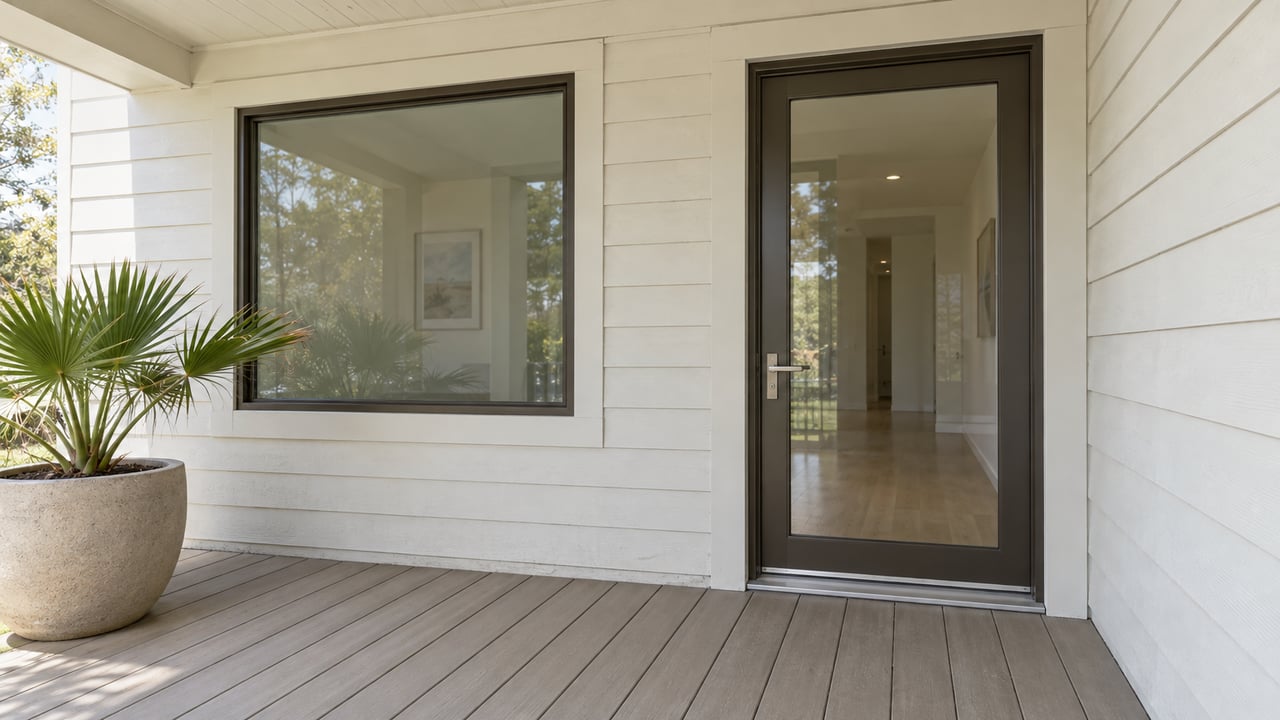
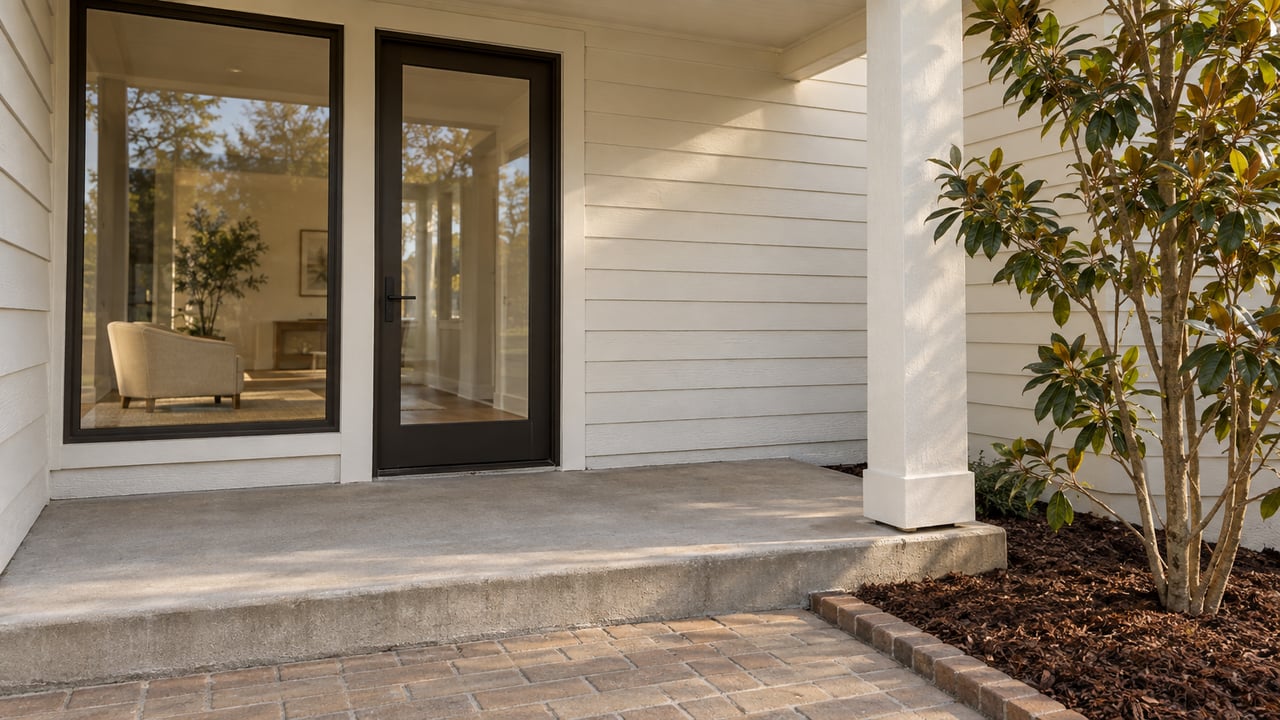
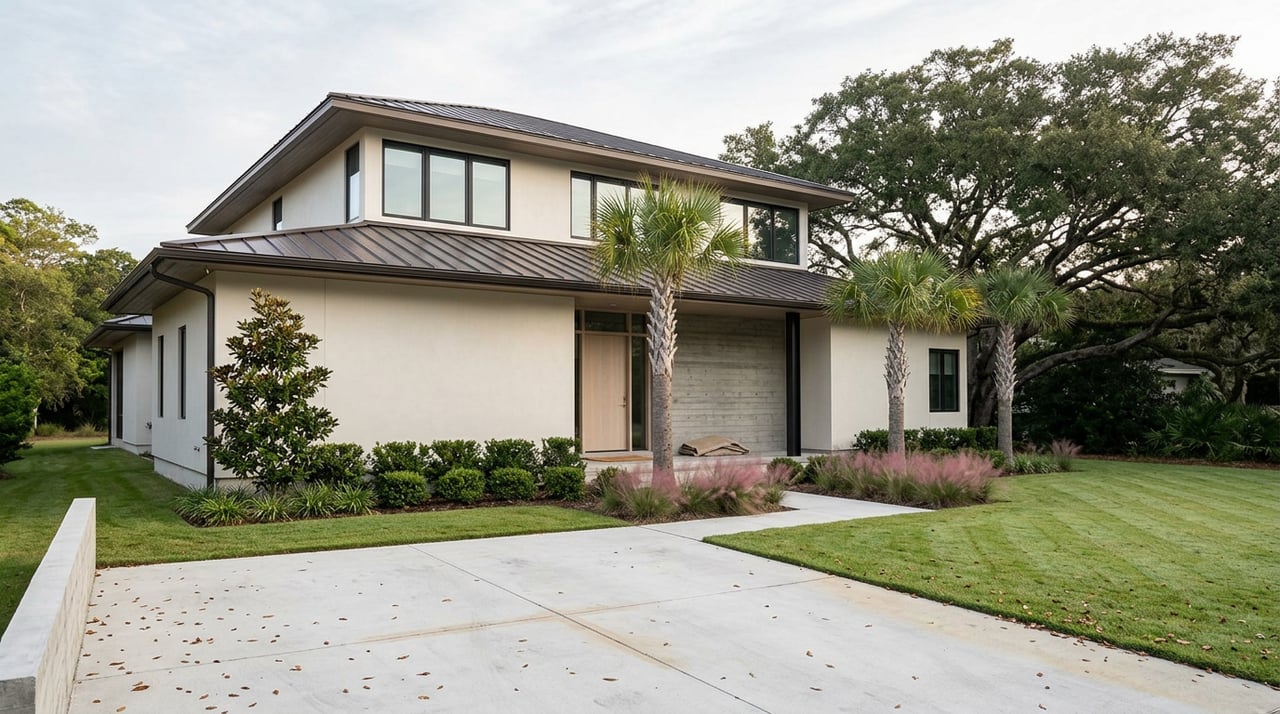
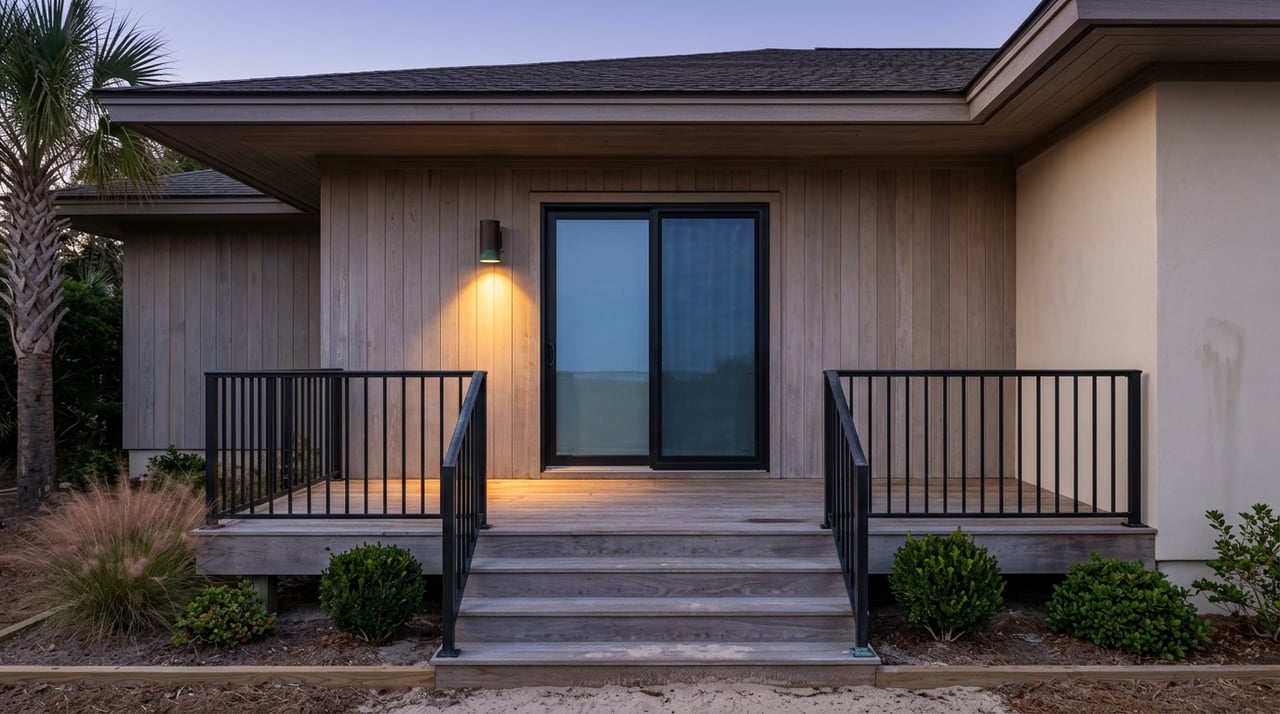
That 150 feet is not a small margin on a barrier island twelve miles long and roughly a few blocks wide in most stretches. Depending on where a house sits, a good portion of the ground floor, the deck, the pool cage, and the exterior fixtures a builder installed without a second thought can sit inside or right at the edge of that line.
The reason the ordinance cares about light rather than just footsteps is straightforward biology, not sentiment. A nesting female reads the horizon to decide whether a stretch of beach is safe. Hatchlings do the same thing in reverse, using the brightest edge of the sky, which should be the open ocean, to find water. A porch light, a pool light, or an uncovered window left glowing after dark can outcompete the moon and the horizon, and send a nest of hatchlings crawling toward a house instead of the surf. That is the entire reason the Oak Island Sea Turtle Protection Program's guidance to shut off exterior lights and close blinds after dark is not a courtesy campaign. It is the practical version of what Chapter 4 already puts into code.
The Night Shift Is Staffed by Your Neighbors
The organization enforcing this rhythm year after year is not a state agency with a rotating staff. It is the Oak Island Sea Turtle Protection Program, an all-volunteer nonprofit founded in 1989, marking its 37th year of operation in 2026. Coordinators Suzan and Greg Bell hold the program's Endangered Species Permit from the North Carolina Wildlife Resources Commission and oversee more than 200 volunteers who split the island's beach into a working patrol route.
The monitoring zone runs about 10.5 miles, from Martin Street on the east end to The Point on the west end, inside town limits. East of the Oak Island Pier, a separate group called Caswell Beach Turtle Watch picks up the rest of the shoreline. Every morning from May through October, someone from one of these two groups is walking that stretch looking for the wide, tractor-tire track a nesting loggerhead leaves behind. Once a nest is confirmed, it gets flagged, and roughly 50 days later a volunteer known as a Nest Parent begins a nightly vigil at that specific spot, watching for the moment hatchlings break the surface, sometimes building a low runway of garden edging to steer them toward the water and away from house lights or foot traffic.
If a resident spots turtle activity, nesting, a stranded animal, or hatchlings on the move, the program staffs a hotline around the clock at 910-945-8888. It is a faster and more useful call than 911 for this specific situation, and it goes straight to someone trained to respond.
Right Now Is the Part of the Season That Actually Matters
Nesting on Oak Island runs from roughly mid-May through August. Hatching follows about 50 to 60 days behind each nest, which means the eggs going into the sand in June and July are the ones breaking the surface right now, in the second half of August. Local television coverage of the program tracked 75 confirmed nests as of early August 2025, with roughly a third already hatched by that point, a tally that news outlets reported directly from the program. That was last year's count, not this year's, but the shape of the calendar repeats: late July and August are consistently the peak weeks for hatchlings statewide, and hatching activity can continue into October.
Set that against one more number the program shares openly: only about 1 in 1,000 hatchlings survives to adulthood. Most of that attrition happens in the ocean, out of anyone's control. But the portion of it that happens on the sand, a hatchling drawn toward a porch light instead of the surf, disoriented long enough to be picked off by a gull or a ghost crab, is the part a single exterior fixture can influence. That is the stake behind an otherwise ordinary-sounding request to turn off a light.
What This Actually Asks of a House Right Now
For anyone whose property sits near the sanctuary line through the rest of hatching season, the specifics are narrower than most people assume:
- Any light visible from the sand should be off, or switched to a shielded, downward-facing amber or red fixture if it has to stay on for safety.
- Curtains or blinds should stay closed after dark on ocean-facing windows, since interior light reads the same way to a hatchling as a porch fixture.
- Beach gear, chairs, canopies, and similar equipment should come off the sand each night rather than sitting out overnight.
- Beach gear also needs to stay at least 10 feet clear of any marked nest and 15 feet clear of marked emergency access lanes used by first responder vehicles.
- Dogs are welcome on the beach but are required to be leashed, and are not permitted on the sand at all between 9 a.m. and 6 p.m. from Memorial Day through Labor Day.
None of this requires a resident to become a volunteer. It requires knowing the calendar and treating a handful of exterior details, a switch, a curtain, a chair left out past dusk, as part of what living this close to the water actually involves for a few months each year.
The Detail Worth Remembering After October
The rhythm resets every spring, but the part worth carrying past hatching season is how much of it lives in the house itself rather than the beach. Exterior lighting choices, window treatments on ocean-facing rooms, even where a deck or pool light gets wired, all sit inside a framework that has nothing to do with taste and everything to do with a 37-year-old volunteer program and a town ordinance that has been on the books for years. It is one more example of how a property here behaves differently than an identical floor plan a few states north, and why the small physical decisions in a home tend to matter more on a barrier island than people expect walking in.
If a renovation, a new deck, or an exterior lighting plan is on the horizon and the sanctuary line runs through the conversation, Crystal Austin has spent enough time on this stretch of coast, and enough time evaluating the physical realities of coastal properties, to help think it through before the first fixture goes up. A private consultation is the easiest way to start that conversation.
This article is general information, not legal, tax or financial advice. Consult a qualified professional about your situation.