Should you build new or buy a resale in Southport? On the coast, the right answer depends on more than price and finishes. Permitting shifts, flood rules, insurance, and timelines all shape your experience and long-term costs. In this guide, you’ll learn how those factors play out in Southport so you can choose with confidence. Let’s dive in.
Southport market at a glance
Southport is a small coastal city that attracts second-home buyers and retirees, so neighborhood and community amenities can drive big price differences. Recent market snapshots show medians often near the upper 400s to around the mid 500s depending on area and timing. You can confirm current trends on the Southport market overview before you start touring or drafting offers. For a focused search, compare communities by location, HOA rules, waterfront access, and maintenance expectations.
- See a current snapshot: the Southport market overview.
Rules and permits that shape new builds
Who handles permits now
If you are building in Southport’s former extraterritorial jurisdiction, permitting and inspections moved to Brunswick County in 2024. Many projects in that area now use the county’s portal and inspection teams, which can change review timelines and add new submittal steps. Review the city’s notice on the transfer to know where your application belongs and how to track inspections. This helps you set a realistic construction calendar from day one.
- Read the city’s update on the ETJ permit transfer to Brunswick County.
Stormwater standards increased in 2026
Brunswick County now requires most new projects to design for a 100-year storm event. This is a higher standard than the older 25-year baseline and can increase engineering, retention capacity, and plan review depth. Expect potential impacts on subdivision design, lot yield, and site costs. Ask your builder or engineer how the rule affects your lot and schedule.
- Learn what changed in the new 100-year stormwater standard.
Building code timing is in transition
North Carolina delayed the adoption of the 2024 State Building Code. Depending on permit timing and local enforcement, a project may still be under the 2018 code or use approved alternatives. Wind, flood, and energy provisions can change materials and costs, so confirm which edition applies to your permit before you finalize specs.
- See the state’s notice on the 2024 code delay.
Coastal construction must‑haves that affect cost
Coastal homes face wind, water, and salt. New builds typically include details that are less common inland.
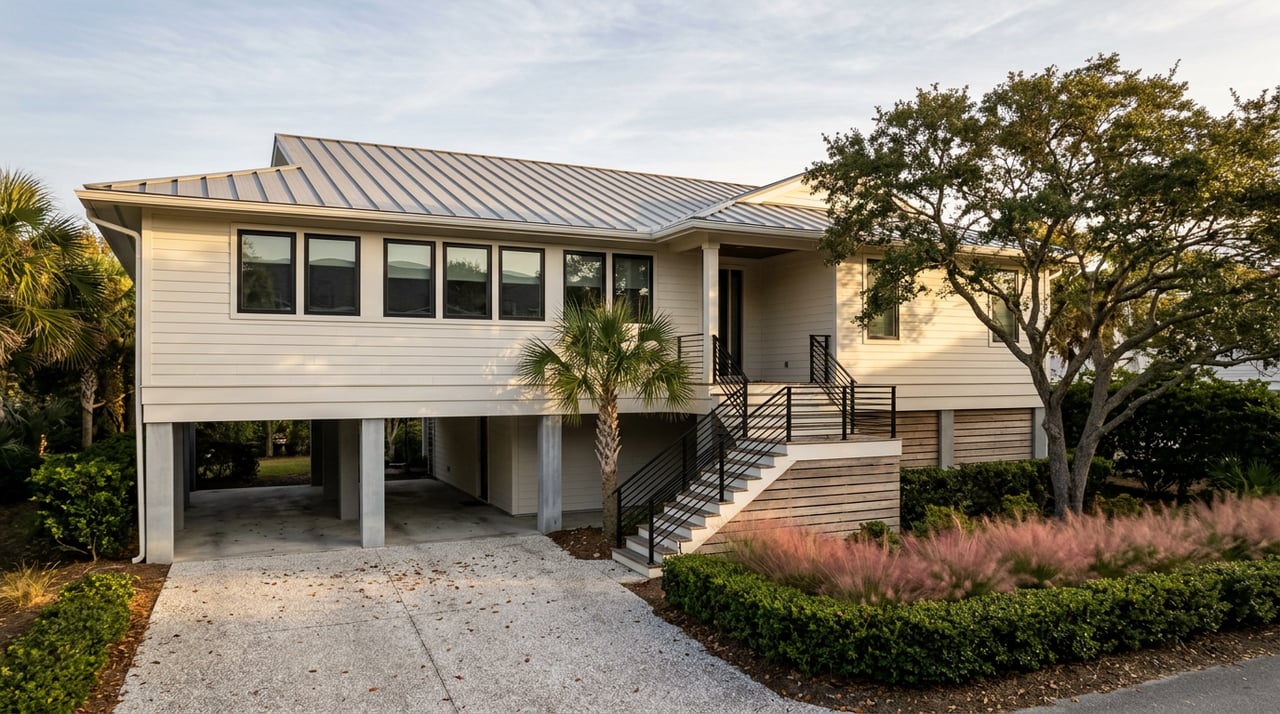
- Elevation and foundations. Many waterfront or flood-prone lots need elevated living areas above Base Flood Elevation with required freeboard. Pile or open foundations help water pass under the structure and reduce damage risk. See FEMA’s coastal guidance for design principles that improve performance.
- Flood-resistant materials and utilities. Lower levels often require flood-resistant materials, with HVAC and electrical elevated out of harm’s way. Breakaway walls may be used in specific zones to reduce structural loads during floods.
- Wind-resilient connections. Hurricane ties, a continuous load path, proper roof attachments, and impact-rated openings help resist uplift and debris.
- Corrosion and moisture protection. Stainless or coated fasteners, rot-resistant materials, and careful flashing reduce long-term deterioration in salt air.
- Consider resilience programs. Some builders target standards like IBHS FORTIFIED that can reduce storm losses and may help with insurance incentives over time.
Resources:
- FEMA’s technical guide: Coastal Construction Manual (FEMA P‑55)
- Program insight: IBHS FORTIFIED updates and grants
Resale realities on the coast
Existing homes offer character, established landscaping, and quicker move-in. On the coast, you still need to review flood and wind details.
- Floodplain compliance. Brunswick County enforces a Flood Damage Prevention Ordinance. Ask for an elevation certificate and any floodplain permits on file. This helps you anticipate flood insurance requirements and potential retrofit needs, such as elevating mechanicals or adding vents.
- Insurance availability and price. Flood coverage is separate from homeowners insurance. In some coastal areas, wind coverage may be placed through the state’s Coastal Property Insurance Pool when private carriers decline a risk. Get quotes early and confirm hurricane deductibles before making an offer.
- Condition and maintenance. Salt air, moisture, and past storms can leave hidden issues. A coastal-savvy inspector can evaluate roofs, windows, decks, crawlspaces, and corrosion-prone components.
Key documents and contacts:
- County rules: Brunswick County Flood Damage Prevention Ordinance
- Wind coverage background: Coastal Property Insurance Pool (NCIUA)
Timelines, costs, and warranties
- Build timelines. Nationally, many single-family builds complete in roughly 9 to 12 months from permit, with custom or coastal projects often taking longer. Local permitting, flood studies, and specialized foundations can extend schedules. If your timeline is tight, consider a nearly finished spec home or a well-maintained resale.
- Cost drivers. Coastal design adds line items for elevation, drainage, corrosion resistance, and wind-rated components. Site development is often the biggest variable, so compare bids that spell out foundations, stormwater, and material specs rather than price per square foot alone.
- Warranties. New homes often include limited warranties, commonly one year on workmanship, two years on major systems, and ten years on structural elements. Read coverage, exclusions, and transfer rules before closing.
Helpful references:
- Timing benchmarks: What to expect when building a home
- New-home warranty structure: 2‑10 Home Buyers Warranty overview
Which path fits your goals
If you want low maintenance and speed
- Favor move-in ready resales or nearly complete spec homes.
- Verify insurance early for the exact address, including wind and flood.
- Confirm short-term rental rules if income matters, and check HOA covenants.
- Ask about resilience features like impact windows or a strengthened roof.
If you want customization and modern resilience
- Choose new construction when layout, materials, and energy performance are top priorities.
- Budget added time for design, permitting, and site work, especially in flood-prone or marsh-adjacent areas.
- Select a builder who clarifies code edition, stormwater responsibilities, and included warranties.
- Consider upgrades that improve durability and may support insurance credits over time.
How to compare two specific homes
Use this quick, apples-to-apples process:
- Price and total monthly cost. Compare mortgage payment with estimated wind and flood premiums, HOA dues, and utilities.
- Flood and wind posture. Ask for elevation certificates and roof/window details. When in doubt, consult a coastal inspector.
- Site and maintenance exposure. Look for drainage patterns, deck condition, fastener corrosion, and crawlspace moisture.
- Timeline and certainty. A resale can close in weeks. A new build offers new systems and warranties, but you wait through construction.
- Exit and resale outlook. Favor well-sited lots, durable finishes, and documented improvements or mitigation.
When you are ready to weigh specific addresses, a contractor‑savvy advisor can help you read plans and permits, interpret elevation data, and negotiate builder terms confidently.
Ready to choose your best path in Southport? For private, technically informed guidance and curated options, schedule a confidential consult with Crystal Austin.
FAQs
How long does new construction take in Southport?
- Many single-family builds take about 9 to 12 months from permit, with coastal site work and engineering sometimes adding time.
How do Brunswick County’s stormwater rules affect new builds?
- Designing for a 100-year storm often increases engineering, retention features, and review steps, which can affect lot yield, timelines, and site costs.
Do I need flood insurance for a Southport home?
- If the property is in a Special Flood Hazard Area or your lender requires it, you will need a flood policy; many coastal buyers secure flood coverage regardless for risk management.
What should I ask a builder before signing a contract?
- Confirm the code edition, included resilience features, stormwater responsibilities, allowance budgets, and the structure and transferability of the new-home warranty.
How can I compare insurance costs for two addresses?
- Request written quotes that specify wind and hurricane deductibles, flood premiums, and any credits for mitigation like impact windows or a strengthened roof.