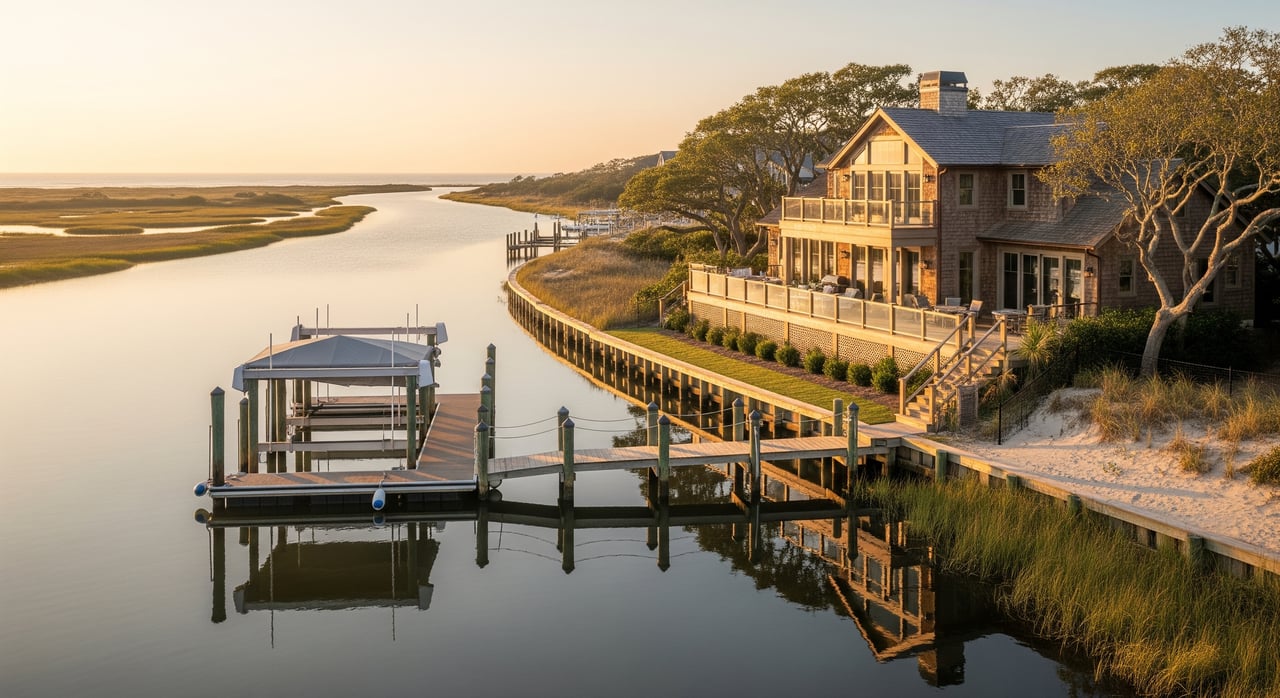
Trying to choose between ICW, canal, or oceanfront on Oak Island? It is a great problem to have, but the differences matter. Each waterfront type shapes your daily routine, boat options, permit path, and long-term costs. This guide breaks down what changes on Oak Island when you pick oceanfront, Intracoastal Waterway, or canal-front so you can buy with confidence. Let’s dive in.
Oceanfront on Oak Island
Oceanfront lots sit directly on the Atlantic beach with dunes between the home and the shoreline. You get the wide horizon, surf sound, and a front-row seat to the beach.
What to expect
- Broad panoramic views and direct beach access.
- Dune systems and coastal setbacks define where you can build.
- Elevated construction and wind design are common.
Pros
- Best beach access and full ocean views.
- Strong vacation appeal and potential rental demand, where allowed.
- High long-term desirability.
Cons
- Highest acquisition and insurance costs.
- Greater exposure to storms and erosion.
- Strict coastal construction rules; private ocean-side docks are not practical or permitted in most cases.
Best fit
- You prioritize daily beach living, views, and top-tier resale potential.
ICW-front on Oak Island
ICW-front parcels face the federally maintained Atlantic Intracoastal Waterway. Water is typically deeper than canals, with stronger currents and more boat traffic.
What to expect
- Larger docks and boat lifts are often feasible, subject to depth, width, and permits.
- Passing wakes, aids to navigation, and nearby bridges shape daily conditions.
- Sunset views may be prominent depending on orientation.
Pros
- Deep-water access for larger boats and longer cruising without open-ocean crossings.
- Often larger backyards and dock systems.
- Strong balance of water lifestyle and convenience.
Cons
- Boat traffic and wakes can affect quiet and tie-up security.
- Currents and bridge clearances matter for taller vessels.
- Permitting and maintenance for larger docks can cost more.
Best fit
- You value boating range, deeper water, and a dock that handles a larger vessel.
Canal-front on Oak Island
Canal-front lots face narrower, more protected man-made waterways. Water is calmer, and views are more intimate than on the ICW or oceanfront.
What to expect
- Smaller docks for bay boats, skiffs, and personal watercraft.
- Shallower depths and turning limits in some canals.
- Neighborhood vibe with close-in water access.
Pros
- Sheltered waters ideal for paddleboards, kayaks, and family boating.
- Often lower price point than oceanfront or ICW-front while keeping a dock.
- Calmer conditions with less wake impact.
Cons
- Boat size limited by depth and geometry.
- Shoaling can require periodic dredging in some areas.
- Views are narrower, with “tunnel” sightlines down the canal.
Best fit
- You want protected backyard water access, neighborhood feel, and relative value.
Dockability and permits
On Oak Island, dock feasibility depends on depth, frontage width, nearby vegetation or marsh, and access to navigable water. Most projects require multiple approvals.
Who permits what
- Federal: The U.S. Army Corps of Engineers oversees work in navigable waters, including projects affecting the ICW.
- State: The North Carolina Division of Coastal Management issues CAMA permits for docks, bulkheads, and shoreline changes. Review the program on the NC Division of Coastal Management CAMA page for process and standards.
- Local: Town of Oak Island and Brunswick County add zoning, setbacks, and stormwater rules. Property-line setbacks for docks may apply.
For a full overview of coastal permitting, start with the North Carolina Division of Coastal Management’s guidance on CAMA permits at the official state site.
Practical constraints
- Length and scope: Permits often limit dock length and slips to protect navigation and habitats.
- Depth and tides: ICW lots generally enjoy deeper water. Some canals shoal or get shallow at low tide.
- Bridges and obstructions: Fixed bridges set height limits. Canal geometry can restrict turning room.
- Dredging: Not every lot is eligible. Maintenance dredging is costly and needs separate approvals.
- Ocean-side rules: Hard stabilization along the oceanfront is limited, and dune systems are protected.
Smart steps before you offer
- Get a preliminary opinion from a marine contractor or coastal engineer about depth, dock configuration, and permit feasibility.
- Verify any existing permits and as-built dock approvals.
- Confirm neighborhood or HOA rules regarding private docks and shared facilities.
Lot layouts and views
How each waterfront type “lives” on the lot will shape your design and privacy.
Oceanfront layout
- Homes orient toward the water with windows and decks facing the beach.
- Dune and setback lines define the buildable footprint.
- Street-side space can be tight for parking or garages.
ICW-front layout
- Deeper backyards and broader water frontage are common.
- Space for larger docks or multi-slip setups may exist if width and depth allow.
- Views span a wider water surface, with boat traffic as part of the scene.
Canal-front layout
- Modest frontage and closer-in water views.
- Smaller docks and floating systems fit best.
- Intimate, neighborhood view corridors rather than wide horizons.
Market positioning and drivers
While individual properties vary, relative price patterns tend to follow the water.
- Oceanfront typically commands the highest price per square foot due to views and direct beach access.
- ICW-front sits mid to high tier with a premium for deep water and dockability.
- Canal-front offers mid-tier value with water access at a lower entry point.
Other factors often outweigh waterfront type:
- Buildable footprint, elevation, and FEMA flood zone.
- Existing dock rights, seawalls, and permits.
- Proximity to marinas, ramps, bridges, and daily amenities.
- Rental rules and property condition or storm history.
Insurance, flood risk, and maintenance
Waterfront exposure changes your risk profile and ongoing costs.
- Flood zones: Many oceanfront and ICW lots fall in higher-risk flood zones, which can require flood insurance. Confirm a property’s status using FEMA Flood Insurance Rate Maps and request any existing elevation certificate. Learn more at FEMA’s official site.
- Wind and hurricanes: Oceanfront and exposed ICW properties face stronger wind and wave action, which can influence wind coverage and design needs.
- Lifecycle costs: Expect ongoing dock upkeep, bulkhead or seawall maintenance where allowed, dune stewardship on oceanfront, and potential sediment management in canals.
For coastal trends and tides, NOAA’s official resources provide data on sea level and local tidal conditions that can inform long-term planning.
Which waterfront fits your goals
Use your top priorities to guide your choice.
- Beach-first lifestyle and maximum view premium: Choose oceanfront. Check dune setbacks, flood zone, and wind requirements.
- Larger boats and deep-water cruising on protected routes: Choose ICW-front. Confirm depth, current, bridge clearance, and dock permit history.
- Calmer, family-friendly water access and value: Choose canal-front. Verify canal depth, turning room, and any dredging history.
Quick buyer checklist
- Pull FEMA flood zone data and request an elevation certificate if available. Review FEMA mapping before you offer.
- Ask a marine contractor or coastal engineer for a dock feasibility read.
- Confirm any existing dock or seawall permits and as-built approvals.
- Check Town of Oak Island rules and any HOA policies for docks and short-term rentals.
- Obtain quotes for wind and flood insurance for the specific address.
How I help you decide
Waterfront on Oak Island is about aligning lifestyle with practical realities. You deserve decision-grade insight on docks, permits, flood zones, and construction. With a hands-on approach and a network of local specialists, you can move from uncertainty to clarity before you write an offer.
If you are weighing two or three properties, I can help you compare them side by side, coordinate preliminary contractor reviews, and surface any red flags early so you are not surprised later. If privacy matters, we can keep conversations confidential and move at your pace.
Ready to explore the right waterfront fit on Oak Island? Schedule a Private Consultation with Crystal Austin for discreet, technically informed guidance.
FAQs
What is the main difference between ICW and canal lots on Oak Island?
- ICW lots face a deeper, navigable channel suited for larger boats, while canal lots offer calmer, narrower waters with depth and turning limits that fit smaller craft.
Do I need permits for a private dock on Oak Island?
- Yes. Most docks require approvals that can include local review and a CAMA permit from the state; some projects also involve the U.S. Army Corps of Engineers.
How long do dock permits usually take in coastal North Carolina?
- Timelines vary from weeks to many months depending on scope, depth, and environmental factors; build your purchase and construction plans around possible delays.
How do I check a property’s flood risk before I buy?
- Review FEMA Flood Insurance Rate Maps and request any elevation certificate from the seller or town; insured costs depend on the exact structure and elevation.
Can I build a seawall on an oceanfront lot?
- Ocean-side hard stabilization is restricted, and dune systems are protected; plan for coastal setbacks and design solutions that comply with state coastal rules.
Are canal-front properties eligible for dredging to improve depth?
- Some canals need periodic dredging, but not every lot is eligible; dredging requires separate approvals and can be costly, so verify feasibility early.