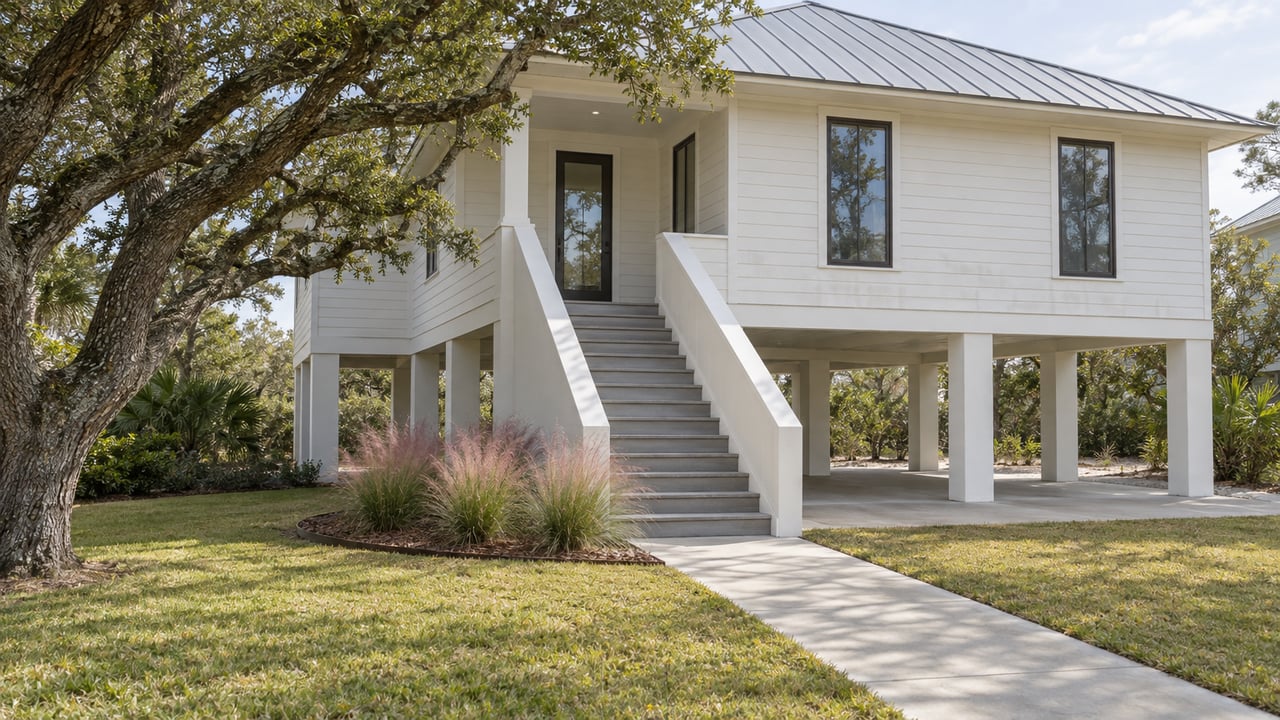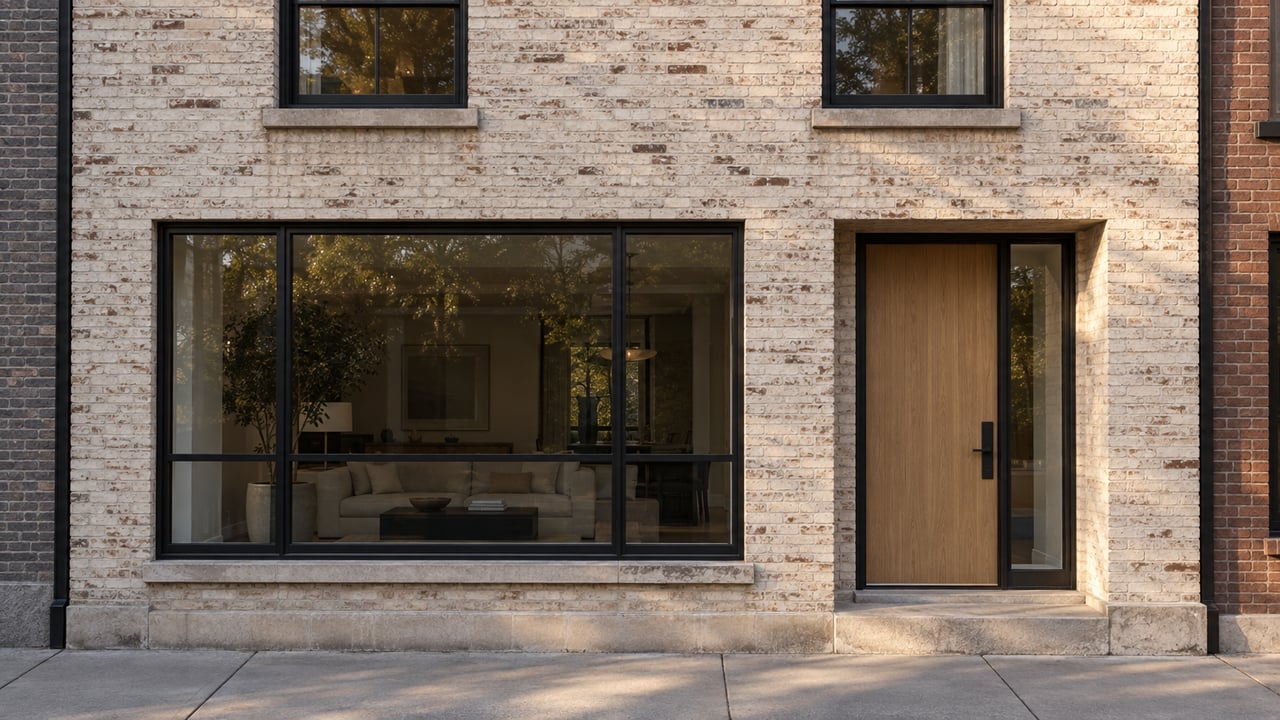
If you have been watching downtown Southport this year, you already know the Bay Street, Moore Street, and Nash Street corridors were on the verge of a very different regulatory regime. As of early July 2026, that regime is off the table. The question worth asking is not whether the overlay was a good idea. It is what its collapse changes for anyone writing an offer on a home inside the old 100 lots.
The short answer: quite a bit, and not in ways the listing photos will show.
The friction that almost priced itself in
For nearly four years, the Southport Historic Preservation Commission drafted a Local Historic District Overlay covering 386 parcels across the city, addressing rezoning case ZMA-25-02. The proposed boundaries included properties along Bay Street from South Caswell Avenue to the east side of South Rhett Street, Moore Street from Yacht Basin Drive to Kingsley Drive, Nash Street, West Street from Short Street to East West Street, and West Brown Street from the west side of Hillcrest Drive to North Rhett.
Inside that boundary, the mechanics would have been meaningful for buyers. A Certificate of Appropriateness would have been required prior to any other permit, issued for changes to buildings and sites within the district to ensure changes are congruous with the character and qualities of the historic district. On a contributing structure, the overlay could have stalled the process of a teardown, giving commissioners a year to delay demolition, study alternatives, and attempt to work with the owner. If the owner still wanted to tear down a structure, they would have to rebuild to the overlay's guidelines.
For a buyer planning a full renovation, or a seller weighing a lot-value pitch to a builder, that is not a footnote. It is a scope-of-work question, an insurance question, and a timeline question.
What Senate Bill 876 actually did
On July 2, 2026, the state resolved the debate for the city. The North Carolina General Assembly ratified Senate Bill 876, a wide-ranging local laws measure signed by Senate President Rachel Hunt and House Speaker Destin Hall. Under Part XIII of the legislation, the Southport Historic Preservation Commission is abolished. The City of Southport is prohibited from designating a new historic preservation commission, creating any new historic district or historic overlay district, or expanding any existing historic district or overlay district within city limits.
The city is not walking away from the character question. It is changing the tool. The city introduced a Historic Preservation Appearance Commission, which will oversee the current historic district. The main difference is it will make recommendations and not require any measures for homeowners to follow when making changes to their properties. The new committee is allowed under North Carolina General Statutes 160D-304 and 160D-960, which directly authorize the institution of appearance commissions.
For a buyer, the practical changes are worth listing plainly:
- No Certificate of Appropriateness gate on exterior work inside the former proposed boundary
- No mandatory one-year demolition delay on contributing structures
- No design-review body with binding authority over materials, windows, siding, additions, or new construction
- An advisory appearance commission that can suggest, but not require, changes to a renovation plan
- The existing base zoning district still applies, as does the Unified Development Ordinance
That last point matters. Local historic district overlays do not change the underlying base zoning district. If a property could not previously be used for a commercial purpose, the historic district overlay would not change that. The design review process does not specify use. The corollary is now true in reverse: the loss of the overlay does not change what the UDO already permits.
Why this matters at the offer table
Downtown Southport has been trading at a slower rhythm than the 2021 and 2022 frenzy. As of July 12, 2026, MLS-tracked Southport listings showed roughly 235 active listings, an average of 105 days on market, and a median list price near $555,000. Movoto reported a Southport median sale price near $492,000 in November 2025 with days on market widening from 80 a year prior to 93. Coastal Carolina appraisers writing in early 2026 described the broader Brunswick County dynamic bluntly: longer days on market for overpriced listings, greater price negotiation, particularly for properties needing updates, and more focus on move-in ready condition and desirable locations.
Read that context alongside the overlay's collapse and the offer-side implication is specific. A buyer looking at a 1920s cottage on Moore Street six months ago had reason to price in preservation risk: the possibility that a future renovation would require a COA, that a rear addition would need to match district standards, that a teardown-and-rebuild path might be delayed by a year. That risk is gone. If a seller is still holding a price that reflected the assumption of overlay-driven scarcity value, the offer should reflect the reversal.
The opposite consideration applies to a buyer who was drawn to downtown Southport precisely because the overlay looked imminent. The protection that would have constrained a neighbor's dormer, siding change, or teardown is not coming. A buyer who values the streetscape as it stands today is buying a snapshot, not a guarantee.
What still constrains a downtown renovation
The overlay's disappearance is not a green light. Several constraints remain, and they are the ones a construction-fluent walkthrough should catch:
The base zoning and UDO still govern setbacks, height, lot coverage, and use. Coastal properties inside Southport city limits remain subject to state CAMA rules where applicable. Flood elevation requirements are unaffected. And the National Register designation, which has covered the Southport Historic District since 1980, remains in place, though as the local paper noted, the design standards do not apply to the National Register listing, which is an honorary designation and places no restrictions on what an owner may do with a property.
For a buyer of a house built before 1929, the more meaningful constraints are physical, not regulatory. The oldest known residential structure in Southport, the Walker Pike House, was built in 1800. The period of significance the commission worked with ran from 1700 through 1929 and up to 1975. A home from any part of that window carries the usual pre-purchase questions: framing condition, sill and joist integrity, plumbing runs, electrical service, roof envelope, and whether previous renovations were pulled through permits. Those are inspection questions, not overlay questions, and they are where a contractor-licensed eye earns its keep.
The negotiation posture worth taking now
Two moves are reasonable for buyers writing on downtown Southport this summer.
The first is to underwrite the property on its physical merits, not on regulatory scarcity. If the seller's price assumed an overlay would freeze the surrounding streetscape, that assumption is no longer supported. A comparable-sales analysis that leans on 2025 pending-overlay pricing needs a haircut.
The second is to build renovation feasibility into the diligence period rather than the post-close surprise column. With no COA process to plan around, a buyer can go directly to a contractor for a scope-and-cost pass during due diligence. The friction that would have added weeks to a renovation timeline is gone. The friction that comes from a 100-year-old sill plate is not.
Questions we are hearing
Does the National Register listing restrict what I can do with a downtown Southport home? No. The National Register designation is honorary and does not impose exterior review or use restrictions on private owners.
Is the Appearance Commission the same as an HOA? No. The proposed committee will make recommendations and not require any measures for homeowners to follow when making changes to their properties. It has no lien authority and no binding approval power.
Could an overlay come back later? Not through the same mechanism. The City of Southport is prohibited from designating a new historic preservation commission, creating any new historic district or historic overlay district, or expanding any existing historic district or overlay district within city limits. A future change would require action at the state level.
Does any of this change property taxes or insurance? The overlay's absence does not directly change either. Insurance carriers price older coastal homes on construction, elevation, wind exposure, and claims history. Those are the levers to focus on during diligence.
Buying a downtown Southport home in 2026 is a different calculation than it was in January. The regulatory ceiling that looked like it was descending has been removed, the market has slowed enough to reward disciplined offers, and the physical condition of a century-old structure is once again the variable that matters most. If you are considering a purchase inside the former proposed boundary, or weighing a sale where preservation questions were part of your pricing thinking, Crystal Austin at Palm Realty is available for a private consultation to walk the property, the paperwork, and the numbers.