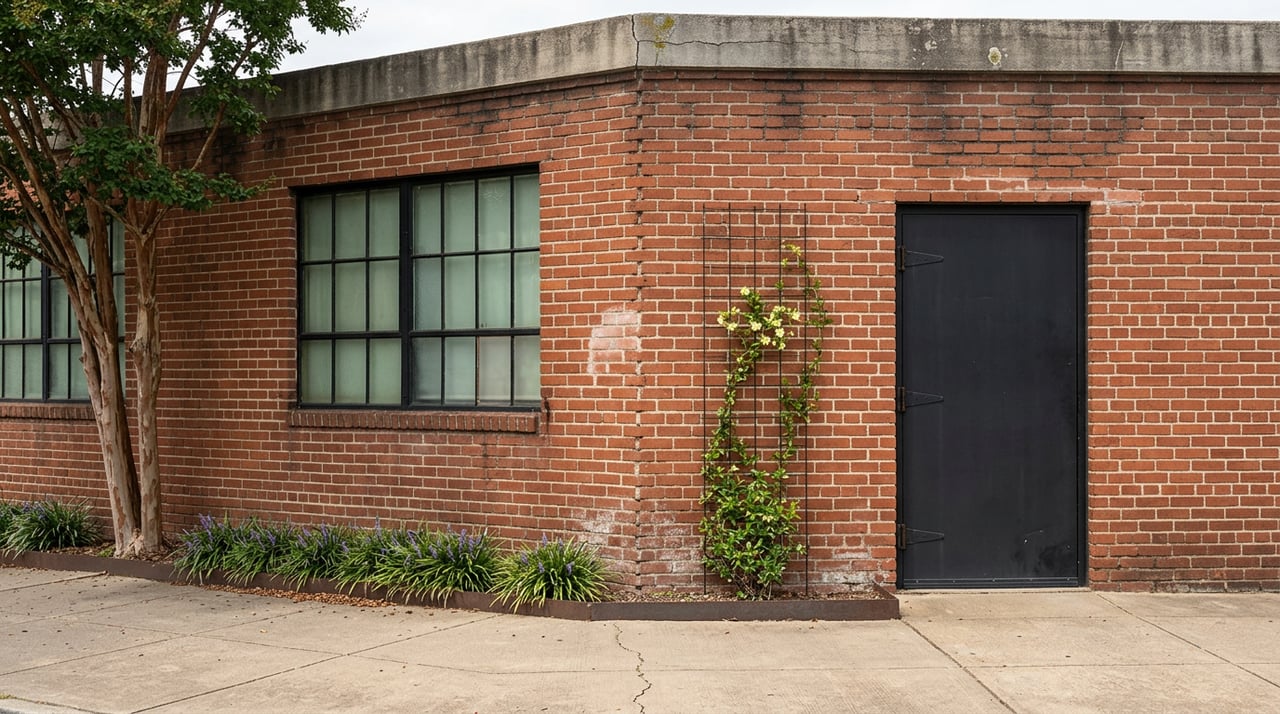
In May, the owners of Palate Bottle Shop & Garden posted the kind of message every neighborhood dreads: after a decade at the corner of North Fourth and Davis Streets, they were closing on June 13. The tone was warm, even celebratory. A landmark was ending. Weeks earlier, the building itself had gone up for sale at $1.5 million.
That distinction matters: a business closure and a property sale are not the same thing. Recent listings and purchases along North Fourth Street highlight the development potential of the underlying parcels as well as their current uses.
The pattern, in five transactions
Palate isn't an isolated case. WilmingtonBiz reported on other properties that have changed hands or gone to market along the same few blocks over the past several months.
| Property | Address | Price | What's actually for sale |
|---|---|---|---|
| Palate Bottle Shop & Garden | 1007 N. Fourth St. | $1.5 million asking | A .335-acre corner lot, listed ahead of the business's June 13 closure |
| Former Edward Teach Brewing | 604 N. Fourth St. | $2.85 million asking | A roughly 7,500-square-foot building, listed in March |
| Acme Art Studios | 711 N. Fifth Ave. | $4.4 million asking | Five adjacent parcels spanning from Fifth Avenue to Fourth Street |
| Beacon Education parcels | 812, 816, 818, 822 N. Fourth St. and 13 Collier Alley | $1.7 million combined | Five parcels purchased earlier this year for a second Spark Academy |
Jeff Hovis, a broker with Intracoastal Realty Corp who has tracked North Fourth Street for a decade, told WilmingtonBiz he sold four lots in the corridor in the six months leading up to June 2026 alone. He's also the listing agent on both the Palate building and the Acme site. That's not a coincidence of who happened to answer the phone. It's a sign that one broker is watching a single mechanism play out across multiple parcels at once.
The zoning behind the pricing
Here's what actually explains the pricing. The commercial parcels discussed here carry Wilmington's central business district zoning, known as CBD. That designation carries two features that matter enormously to anyone doing the math on a property here: no setback requirement, and a by-right maximum building height of 50 feet. Those zoning features may matter to buyers considering development.
That's why the Palate listing describes the building's potential to add a kitchen or a residential component on top of the existing structure, and why Hovis has described the Acme site as capable of supporting multiple simultaneous uses, gallery space included, with new construction rising around it to support the original use rather than replace it. For a buyer, a property's development potential may matter alongside the business currently operating there. The taproom or bottle shop is part of the property's current use.
This is the part that changes how a buyer should read the corridor. In most commercial real estate, price tracks revenue. A profitable bar sells for a multiple of its cash flow. Here, price is tracking buildable square footage against a height and setback allowance the CBD designation grants by right. Once that gap opens up between what a business is worth as a business and what its lot is worth as an unbuilt envelope, it may affect a buyer's valuation; it doesn't establish why any particular operator chooses to sell.
Nonprofits are already assembling parcels, not just developers
The Beacon Education purchase is the clearest evidence that this isn't purely a speculative developer story. Beacon is a Wilmington-based nonprofit, and it bought five separate parcels in two transactions earlier this year for a second Spark Academy. The fact that Beacon assembled five parcels (four addresses on North Fourth Street plus a lot on Collier Alley) for a combined $1.7 million suggests something else: ownership in this corridor is fragmented enough, and priced accessibly enough, that assemblage may be achievable for a buyer with patience and a plan, not just for institutional capital.
That's a different opportunity profile than most investors expect from an "up and coming" arts district. You're not necessarily competing against a REIT for a single trophy building. You may be competing against a school, a brewery operator, or a private buyer, each one pricing the same handful of parcels against the same 50-foot ceiling.
What this means depending on who you are
If you're evaluating Brooklyn Arts District real estate as an investment or redevelopment play, the practical takeaway is to stop pricing a building against its current tenant's revenue and start pricing it against what CBD zoning actually allows on that lot. Ask what's next door, not just what's operating today. The Acme site's five parcels only make sense as an investment if you're thinking in terms of what could rise around the surviving gallery use, not what the gallery alone generates in rent.
If you're a second-home or lifestyle buyer drawn to the neighborhood's residential stock, a different set of facts applies. Existing loft and condo conversions in former industrial buildings, including the Modern Baking Company, the Weldon Building, and Brooklyn House on North Fourth Street, represent an earlier wave of adaptive reuse in the same corridor. Those units were priced against the district's character and walkability, not its zoning envelope. As commercial land values rise around them on the strength of buildable height, that established residential stock sits in an interesting position: it isn't going anywhere, but the businesses at street level around it may look very different in five years than they do today. One business owner in the district, Holt, bought her own leased space after her landlord approached her about the sale, and she has said she expects to see more development because there are still large empty parcels in the area.
If you're a seller who owns a building or lot in the corridor, consider both its current use and its zoning classification and position relative to CBD boundaries when assessing an asking price. Zoning potential may be one factor in how buyers value the property.
A short list of questions worth asking before you make an offer
Before writing an offer on any building or lot in this corridor, confirm the parcel's zoning classification and whether it sits inside the CBD designation, since that single fact determines whether the 50-foot, no-setback allowance applies. Ask whether neighboring parcels are under common ownership or separately held, because assemblage potential changes the math on what a single lot is worth. Consider the current business, the building, and the parcel's development potential together when assessing the price. Each contributes a different part of the property's value in Brooklyn Arts District.
FAQ
Does the CBD zoning designation apply to residential purchases in the district too, not just commercial buildings? The no-setback and 50-foot height allowances described in current listings apply to the commercial parcels along North Fourth Street and North Fifth Avenue that carry the CBD designation. Anyone evaluating a residential purchase in the district should confirm the specific parcel's zoning rather than assuming it matches a nearby commercial listing, since zoning can vary block by block even within a small corridor.
Is this level of business turnover a warning sign about the neighborhood? The activity discussed here is not, by itself, evidence of neighborhood distress. Palate's building was listed before its closure, and Hovis has described broad interest from a range of prospective buyers. That activity reads more like a repricing event than a downturn.
How does Brooklyn Arts District compare to other downtown Wilmington corridors for this kind of opportunity? That depends on each corridor's own zoning designation and parcel ownership pattern, which is exactly the kind of block-by-block detail worth confirming before comparing two areas on reputation alone.
If you're weighing a purchase in this corridor, whether as an investor thinking about assemblage, a second-home buyer drawn to the district's converted lofts, or a current owner wondering what your building is actually worth in this market, Crystal Austin can walk through the zoning specifics and comparable activity with you directly. Schedule a Private Consultation to talk through what a Brooklyn Arts District property means for your specific goals.
This article is general information, not legal, tax or financial advice. Consult a qualified professional about your situation.