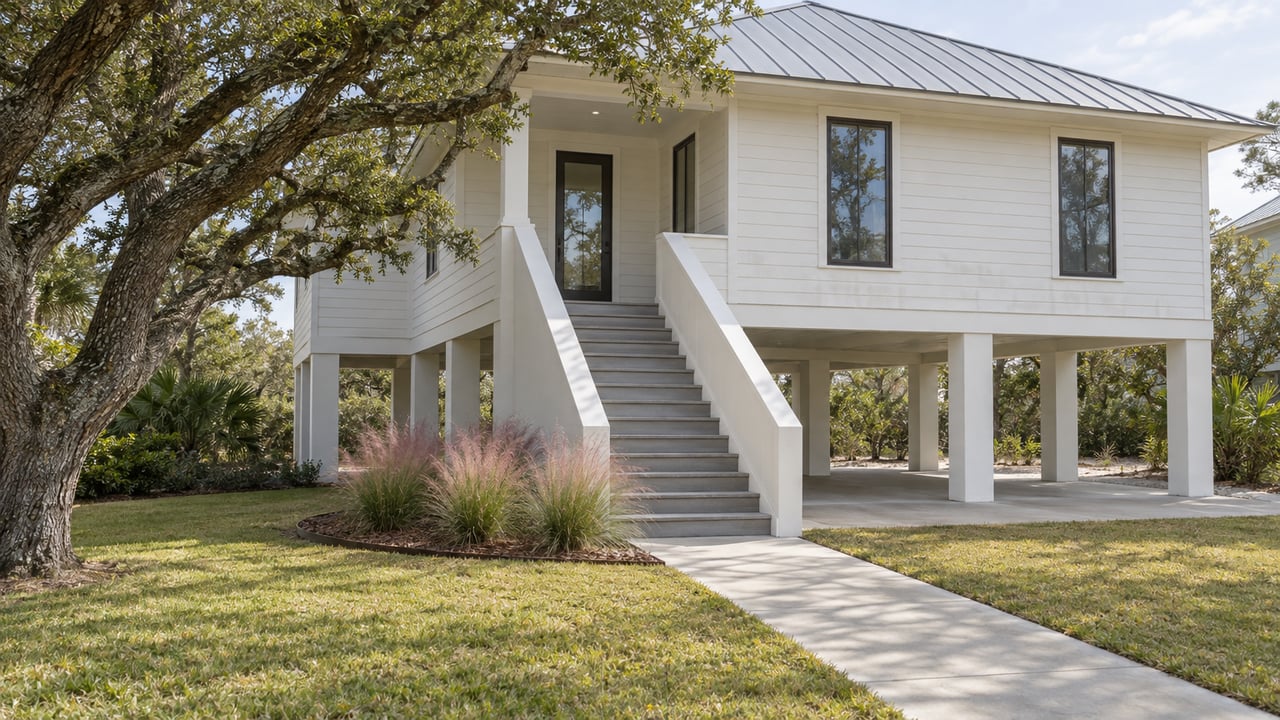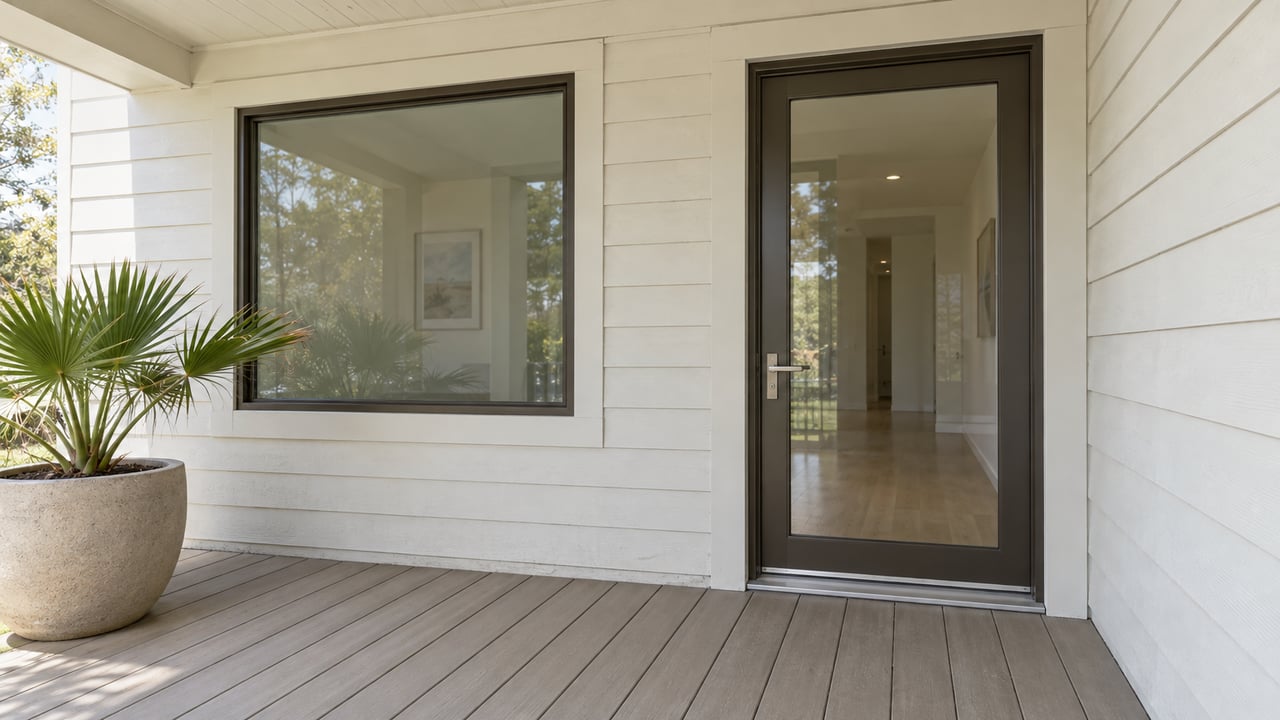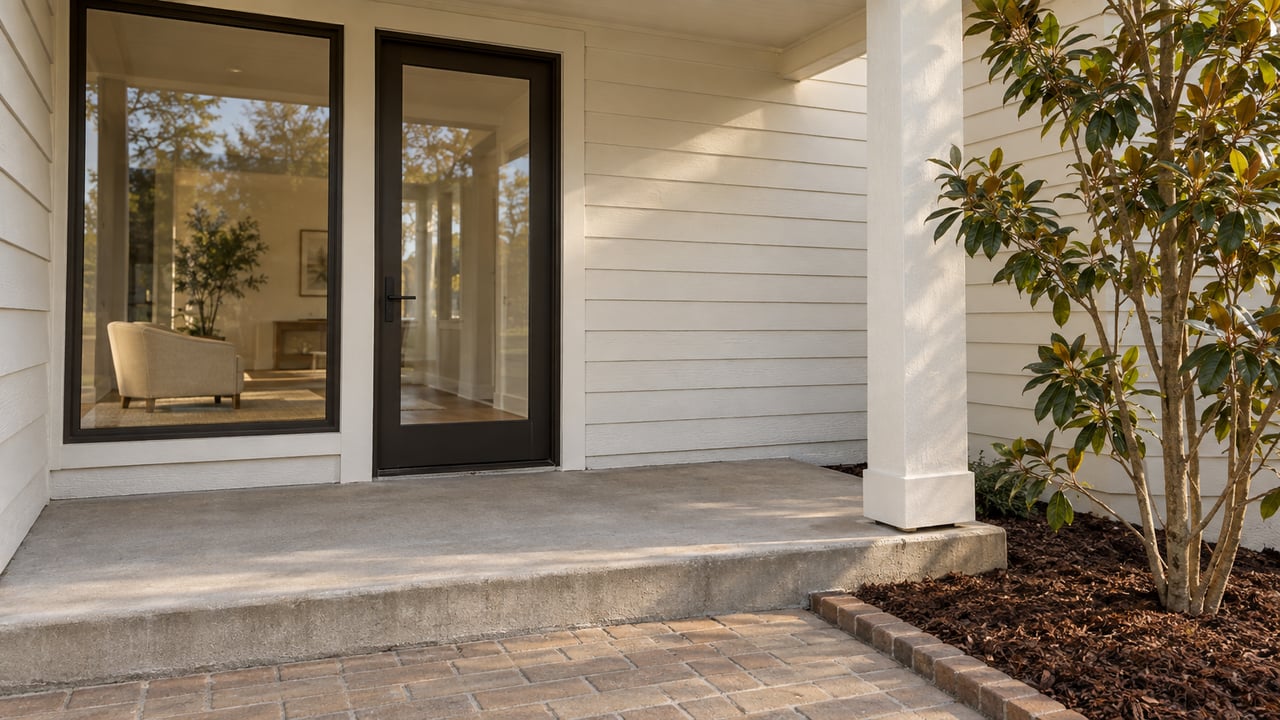
Every Southport buyer under contract eventually sees the flood zone letter on the listing sheet. VE. AE. Coastal A. X. The letter feels like the answer. In 2026, it is barely the beginning of one. The document that actually prices the risk, and the document that can save a buyer thousands per year, is the seller's current NFIP Policy Declarations Page. Ask for it before you finalize your offer, or you are negotiating without half the file.
That is the thesis of this post: on a Southport waterfront or downtown parcel, the flood policy attached to the house is now a transferable asset with its own value, and it often outweighs the zone letter you started with.
The declarations page is the document that matters
Under FEMA's Risk Rating 2.0 pricing, a property no longer sits in a broad zone bucket that sets the premium. FEMA no longer uses a simple Zone X or Zone AE designation to set your price. Instead, they calculate a unique Full Risk Premium for every single property based on distance to water, elevation, and rebuilding costs.
That change is why a paper map is no longer a proxy for the bill. Two houses on the same Southport block, same zone, same square footage, can carry very different Full Risk Premiums. The only way to know is to read the declarations page on the actual policy that covers the actual house.
Request these three lines from the listing side before you write, or before you counter:
- The Current Premium the seller is paying this policy year
- The Full Risk Premium FEMA has calculated for the structure
- The policy's effective date and the community CRS discount already applied
The gap between the first two numbers is what you are inheriting, or walking away from.
Why an assumable policy is a lever, not a footnote
Standard homeowners insurance does not transfer at closing. A flood policy does. Unlike standard homeowners insurance, NFIP flood policies are assumable. That single sentence rewrites the negotiation on a large share of Southport's older waterfront and near-water inventory.
Consider the mechanics. A seller who has held an NFIP policy for years has ridden the statutory glide path from a lower legacy premium toward the Full Risk number. A buyer who assumes that policy keeps the legacy rate and the cap on future increases. A buyer who writes a fresh policy starts at the Full Risk Premium on day one. A seller with a grandfathered policy costing $800/year on a house whose new Risk Rating 2.0 price today would be $2,500/year is a specific illustration of the gap. You can assume the seller's policy. You not only get the cheaper rate immediately, but you also inherit their glide-path cap, keeping future increases limited to 18% per year rather than starting at the higher market rate.
Two practical consequences follow.
First, the request for the declarations page belongs in due diligence, not in the closing packet. If the assumable premium is materially below the Full Risk Premium, that difference is a real, quantifiable value the buyer is receiving from the transaction. It should be reflected in the offer conversation, or at minimum in the buyer's underwriting of monthly carrying cost.
Second, sellers preparing a Southport listing should pull the declarations page before the first showing. A low legacy premium is a marketing asset. On a high-end coastal property where the annual bill can move a buyer's calculus, the assumable policy sometimes matters more than a staged front porch.
What Brunswick County's map actually says about your parcel
Southport sits inside Brunswick County's floodplain framework, and the map version underneath your offer matters. The current Flood Insurance Rate Maps and Flood Insurance Study were issued by FEMA on March 31, 2015 with a 90-day appeals period. FEMA issued a Letter of Final Determination on February 28, 2018, which stated the maps and ordinance would become effective on August 28, 2018. The current FIRMs were again revised on December 6, 2019 to include the outer lying map panels of Brunswick County.
The 2018 update introduced a designation many buyers still miss. The Coastal A Zone is the area landward of a V-Zone, or landward of an open coast without mapped V-Zones. In a Coastal A Zone, the principal source of flooding will be astronomical tides, storm surges, seiches, or tsunamis, not riverine flooding. Practically, a Coastal A parcel behaves more like a VE parcel than an inland AE parcel for both construction detailing and premium math, even though the mandatory purchase requirement reads similarly across the flagged zones.
The zone letter still tells you something. It just does not tell you enough on its own.
| Zone on the FIRM | What it signals at the offer table |
|---|---|
| VE | Coastal high-hazard, wave action; elevation and construction rules drive the premium more than square footage |
| Coastal A | Storm-surge driven, landward of VE; premium math often closer to VE than to inland AE |
| AE | 1% annual chance flood with a Base Flood Elevation; assumable policy value can be significant |
| X or Shaded X | Not regulated by ordinance; policy is optional but private-market pricing is often competitive here |
For any parcel in the flagged zones, the Brunswick County Floodplain Administrator maintains records on elevation certificates and can confirm the mapped zone for the parcel. That office is the primary public source; contact information is published on the Brunswick County flood hazard page.
The reauthorization calendar can stall a federally backed closing
Timing risk is the friction most buyers do not price in until it lands on them. The National Flood Insurance Program is currently authorized by Congress only through January 30, 2026. If Congress does not reauthorize the program by that date, the NFIP cannot issue new policies. For buyers closing in late January or early February, a government lapse could delay closing indefinitely. You cannot close a federally backed mortgage without active flood insurance.
Two moves protect the transaction. If the closing falls within the reauthorization window, bind the policy early rather than three days before closing. And in an assumption scenario, the risk is materially lower because the policy is already in force; the buyer is stepping onto an existing contract rather than asking the program to write a new one.
When $250,000 stops being enough
On premium Southport inventory, the federal cap matters. Private market policies do not always follow the rigid FEMA rules. They can offer higher coverage limits, since FEMA caps at $250,000 for the dwelling, and sometimes include Loss of Use coverage, which FEMA does not offer.
For a mid six-figure or multi-million-dollar coastal home, that cap leaves a coverage gap that has to be filled somewhere. Private carriers active on the North Carolina coast, including Neptune and Lloyd's syndicates, write policies that layer over or replace the NFIP baseline. The right structure depends on the appraisal, the lender's requirements, and whether the seller's assumable NFIP policy is worth keeping as the primary and adding private excess on top. That is a modeling exercise worth doing before the appraisal comes back, not after.
A pre-offer checklist worth running
Before you sign, work through this list with your agent and your insurance broker:
- Request the seller's current NFIP Policy Declarations Page, including the Full Risk Premium line
- Confirm the parcel's zone on the effective Brunswick County FIRM, not on a preliminary or third-party map
- If the closing date sits within a reauthorization window, confirm your lender's position on binding early
- Ask whether the seller's policy is assumable in your name and what documentation the carrier requires at transfer
- Price a private-market layer if the replacement cost exceeds the NFIP $250,000 dwelling cap
- Verify the CRS discount already applied to the community; Southport participates in the NFIP and any CRS class discount flows through the community identification number automatically
Most of these questions are free to ask. All of them change the number you should be willing to write.
FAQ
Does the flood policy really transfer with the house? NFIP policies are assumable. The paperwork is straightforward and the carrier handles the change of insured, but the request needs to happen alongside the contract, not after closing.
If the seller does not currently carry flood insurance, am I locked into the Full Risk Premium? Yes for the NFIP path. That is one reason an unpolicied waterfront listing sometimes trades at a different price than an otherwise identical listing with a legacy policy attached. The private market is often the more useful comparison in that scenario.
How much of the annual increase can I actually inherit as a cap? Statutory annual increases on an existing NFIP policy are limited on a per-policy basis, and the current cap functions as a glide path toward the Full Risk Premium. Your carrier's renewal notice shows the specific increase applied to your policy each year.
Is the Coastal A designation only a construction issue, or does it change my premium too? Both. It affects how the structure has to be built or retrofitted, and it affects the Full Risk Premium FEMA calculates for the property. A parcel that shifted from AE to Coastal A on the 2018 map is not the same underwriting file it was before.
If you are writing an offer on a Southport waterfront home, a downtown historic property, or a near-water second home, the policy math is worth running before the ink dries. Crystal Austin advises buyers and sellers on the technical and transactional side of coastal ownership across Southport, Oak Island, and the Brunswick and New Hanover coast. Schedule a Private Consultation to walk through the declarations page, the map, and the offer together, before the contract locks in a number you did not have to accept.